
Trading card games were among the first blockchain games to find real audiences, and the format continues to suit the model well. Cards map naturally onto tradable assets, and deck building rewards sustained collection. This is an editorial shortlist of blockchain TCGs that are live or in open testing in 2026, ranked on gameplay quality first and token mechanics second. Titles that have shut down or stalled are not included. Several entries also span more than one chain, and we note where each game anchors its economy.
For the full database view, see the TCG blockchain games category.
How We Selected These TCGs
This list is an editorial shortlist based on each game’s visible status in 2026, development stage, public activity, TCG or card-battler fit, and broader Web3 gaming sentiment. We looked at signals such as official updates, X activity, Discord presence, live availability or open testing, community discussion, visible popularity, and our own familiarity with the Web3 gaming sector to shape the final order.
At a Glance
| Rank | Game | Why it ranks here |
|---|---|---|
| 1 | Parallel | Strongest card design and match flow |
| 2 | Might & Magic: Fates | Highest current momentum and a major IP |
| 3 | Gods Unchained | Most polished established TCG |
| 4 | Splinterlands | The steadiest long-running veteran |
| 5 | Dragonz Land | Most active real-time PvP right now |
| 6 | Cross The Ages | Capable all-rounder |
| 7 | Project O | Promising but still early |
| 8 | SolForge Fusion | Distinctive mechanics, smaller community |
1. Parallel
Genre: Sci-fi TCG | Blockchain: Ethereum (Echelon Prime) | Token: PRIME | Platforms: PC, iOS, Android | Status: Live (beta)
Parallel is a 1v1 card game set in a dystopian science fiction universe split across five factions, each called a Parallel. Matches use 40-card decks, and a banking mechanic lets players convert cards in hand into energy for later turns, giving the early game an unusual amount of tension. The game is free to play with starter decks, so owned cards function as an optional layer rather than a barrier. The combination of faction identity and the banking decision gives it a distinct strategic character among blockchain TCGs.
2. Might & Magic: Fates
Genre: Strategy card battler | Developer: Ubisoft (with Immutable) | Blockchain: Immutable zkEVM | Token: None | Platforms: iOS, Android, PC (Steam) | Status: Live (global launch February 2026)
Might & Magic: Fates is Ubisoft’s first trading card game built on the franchise, which dates back to the 1980s. It launched globally on February 4, 2026. Core systems include a mana model where gold is generated from cards held in hand, plus Heroes that evolve and Artifacts that gain experience across a match. Cards can be traded as NFTs through an Immutable marketplace, framed as optional and separate from competitive balance. Whether the collection and competitive systems hold the player base over time remains the key question as the game moves beyond its launch window.
3. Gods Unchained
Genre: Competitive TCG | Blockchain: Immutable zkEVM | Token: GODS | Platforms: PC, Mobile | Status: Live
Gods Unchained has run since 2019, making it one of the longest-operating titles in the category. It is free to play, built around ranked ladder play, regular balance passes, and a meta that shifts with each set. Every card is an NFT, with the GODS token handling crafting and marketplace activity, and a Forge system that lets players fuse cards using an in-game resource called Flux. A multi-year track record and a community that has stayed through several set cycles give it a stability that newer entries are still building toward.
4. Splinterlands
Genre: Auto-resolving TCG | Blockchain: Hive (assets bridged to BSC, Ethereum, Base) | Tokens: SPS, DEC | Platforms: Browser, Mobile, Desktop | Status: Live
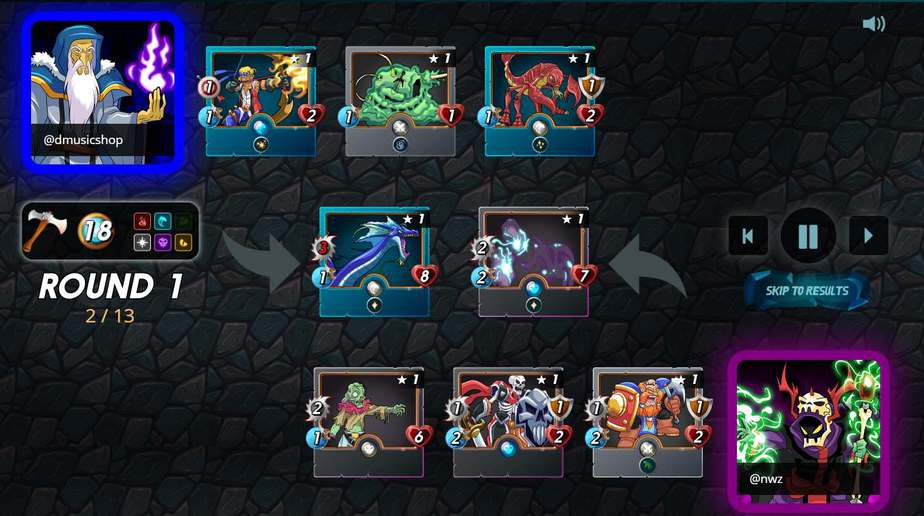
Splinterlands has been live since 2018 and built its reputation on speed. Players assemble a summoner and a team of monster cards, then matches resolve automatically in a couple of minutes, which suits short sessions. It runs on the Hive blockchain, with assets bridged to other networks, and uses SPS for governance and DEC as the in-game currency. Predictable seasons, a long-running economy, and the auto-resolving format make it a reliable choice for players who want frequent short sessions rather than extended competitive matches.
5. Dragonz Land
Genre: Real-time PvP TCG | Blockchain: TON and Venom | Token: DRAGONZ | Platforms: Telegram, Mobile, Web | Status: Live
Dragonz Land began as a Telegram mini app in early 2024 and grew into a full card game with real-time player-versus-player battles and deck building. The studio reports more than 10 million registered accounts. The DRAGONZ token handles purchases, staking, tournament rewards, and governance across both TON and Venom. The real-time PvP format sets it apart from the auto-resolving or turn-based models most other blockchain TCGs use, which has supported its activity levels through 2026.

6. Cross The Ages
Genre: TCG with physical card crossover | Blockchain: Solana | Token: CTA | Platforms: PC, Mobile, Browser | Status: Live
Cross The Ages is a collectible card game set in a dystopian future drawn from a planned seven-book saga. Two players compete to control a board using a deck of ten cards, with matches running around ten minutes. The CTA token handles minting, merging, and tournament entry. The clearest distinguishing feature is the physical/digital card crossover: digital cards can be converted into physical NFC-enabled cards, a capability most blockchain TCGs do not offer. The project is backed by Animoca Brands and Ubisoft.
7. Project O
Genre: Mobile competitive TCG | Developer: Koin Games (with Immutable) | Blockchain: Immutable zkEVM | Token: None (Blueprint NFTs) | Platforms: PC and Mac (alpha), mobile to follow | Status: Public beta
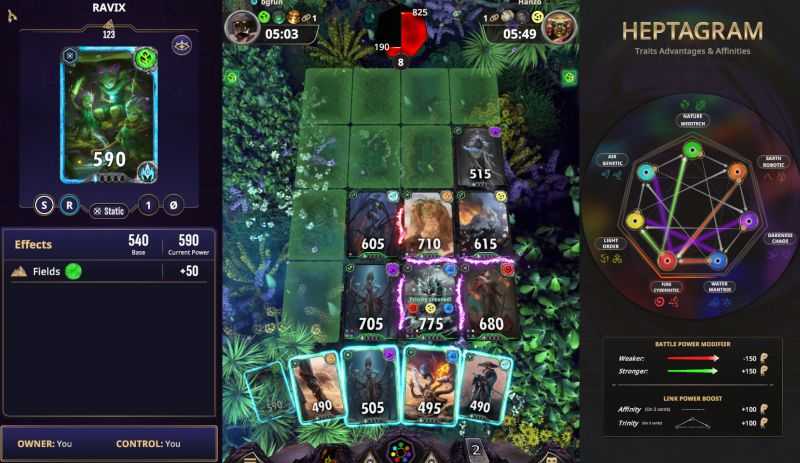
Project O, also referred to as Origins TCG, is a mobile-first card game from Koin Games, a studio whose team has worked on titles including Gods Unchained and Candy Crush. Matches last seven to nine minutes and use simultaneous turns, a three-lane field, and thirteen-card decks. There is no native token. The economy runs on Blueprints, NFTs used to craft, upgrade, and trade cards. Currently in testing on PC and Mac ahead of its mobile target, it needs a wider release before its depth can be properly assessed.

8. SolForge Fusion
Genre: Hybrid deck-building card battler | Blockchain: Solana | Token: SFG | Platforms: PC (Steam), iOS, Android | Status: Live (Early Access)
SolForge Fusion comes from Richard Garfield, creator of Magic: The Gathering, and Justin Gary of Ascension. Its defining idea is the fusion deck: algorithmically generated half-decks combine into a single deck drawn from a pool of more than 40,000 possible cards, meaning no two decks are identical. Cards level up as matches progress. Physical decks can be scanned into the digital version, with the SFG token in the wider economy. It is in Early Access with a smaller following than Gods Unchained or Splinterlands, but the fusion mechanic offers something those formats do not.

TCG Hybrids
Some games use card collecting as an ownership and progression layer without building a traditional head-to-head card game on top of it. In these hybrids, the card collection is how you build a roster or lineup, and the competition is determined by real-world events or autonomous simulation rather than deck play. Two are worth noting in 2026.
Grand Arena (Moku)
Type: Fantasy sports plus TCG | Blockchain: Ronin | Platforms: Web, Browser (PC and mobile) | Status: Live (Season 1)
Grand Arena, developed by Moku, blends card collecting with an AI-driven fantasy contest. Players collect and train Moki NFTs that act as autonomous athletes, build lineups, and enter daily tournaments where those athletes compete on their behalf. Season 1 ran a reward pool of one million RON, and prediction-market elements add another layer to the contests. It runs in the browser on Ronin, accessible on PC and mobile.
Sorare
Type: Fantasy sports plus cards | Blockchain: Solana | Platforms: Browser, Mobile | Status: Live
Sorare is the largest fantasy sports platform in the category, covering football, Major League Baseball, and the NBA through officially licensed player cards. Each card is an NFT, and managers build lineups that score points based on athletes’ real-world performances in weekly competitions. It has agreements with hundreds of clubs and reports around five million users. A cash wallet option lets people buy and play without handling crypto directly. Card performance depends on real-world results rather than deck construction or head-to-head play, distinguishing it from the TCGs in the main ranking.
Conclusion
The blockchain TCG field in 2026 includes a mix of long-running games with established economies and newer titles still building their player bases. Parallel, Gods Unchained, and Splinterlands offer the most depth per session, backed by years of balance updates and set design. Might & Magic: Fates and Dragonz Land bring more recent momentum, and Cross The Ages and SolForge Fusion add format variety to the mix. The hybrids section shows how card ownership can work outside head-to-head play. Status, platform support, and economy design can all change quickly, so the linked game overviews are the best place to confirm current details before committing time or money.
Frequently Asked Questions
What is the best blockchain trading card game in 2026?
Parallel has the strongest card design and match flow of the blockchain TCGs currently available. Gods Unchained and Splinterlands are the most established options, with years of competitive play and set design behind them. Might & Magic: Fates is the most visible recent launch.
Are blockchain TCGs free to play?
Most are. Parallel, Gods Unchained, Splinterlands, Might & Magic: Fates, and SolForge Fusion all offer free entry, with NFTs and tokens as an optional layer rather than a requirement.
Do I need to buy NFTs to play?
Generally no. Several titles give starter decks and let you earn cards through play. Owning NFT cards usually adds trading and progression options rather than gating the core game.
Can I play these on mobile?
Yes. Parallel, Might & Magic: Fates, Splinterlands, Dragonz Land, and SolForge Fusion all run on mobile, and Project O is built mobile-first. Grand Arena and Sorare are playable through mobile browsers.